One chain of custody, from intake to testimony.
Forensic findings only matter if they survive cross-examination. TrueDocX is built around seven integrity principles, so that every exhibit, every observation and every report can be traced, verified and defended — years after the case closes.
Four commitments the platform never breaks.
Integrity by default
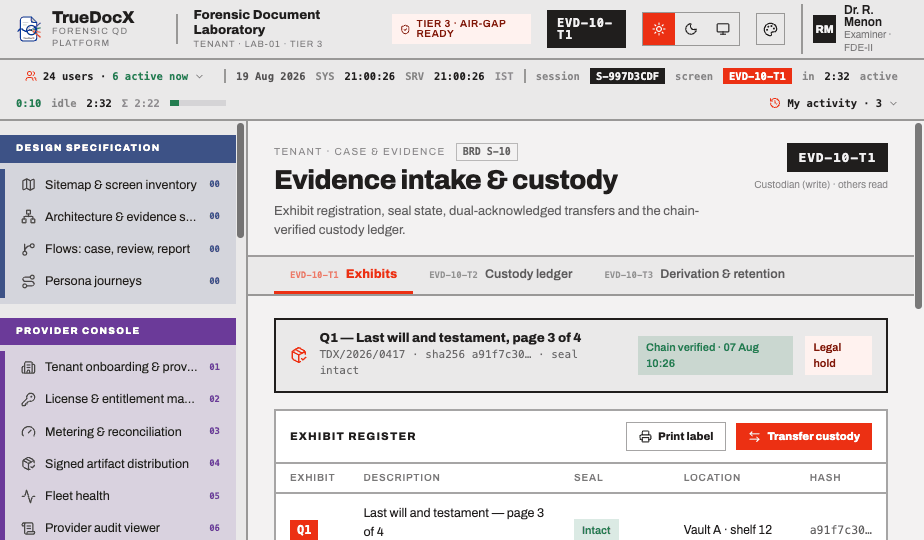
Every file is hashed with SHA-256 the moment it enters the system, and re-verified on every access. Nothing circulates unsealed.
Nothing overwritten
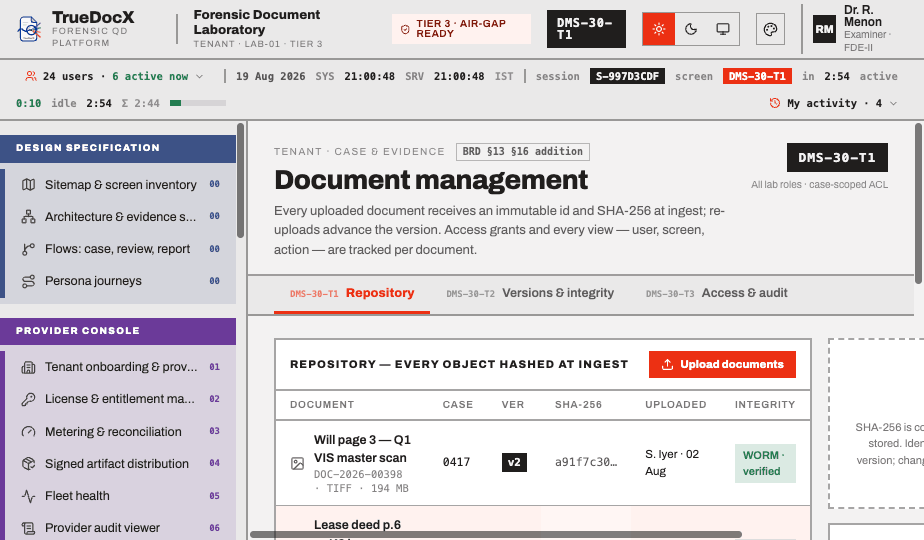
Evidence lives under object-lock WORM retention. New analysis creates parent-linked versions — originals are never edited or deleted.
Blind, graded review
Findings pass independent verification and review gates — VG and RG grades — before anything leaves the laboratory.
Least privilege
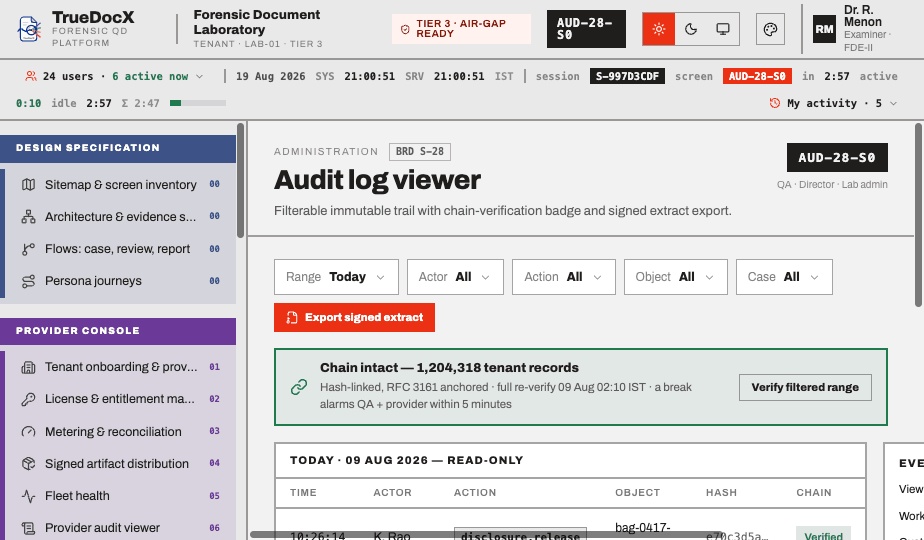
Access is role- and case-scoped. Every view, download and action writes an entry in a read-only audit ledger.
Integrity you can see on the screen.
Hash-identified documents with parent-linked versions, a ledger no one can edit, and access that follows the assignment.
Seven rules every screen obeys — P1 to P7.
The examiner-facing interface follows seven binding design principles, applied across all thirty-plus screens of the product.
Built so the defence can check your work.
- SHA-256 at ingest. Hashes are computed on arrival and re-verified on every read — silent corruption is impossible to miss.
- Parent-linked version chains. Every derivative and annotation points to its source; nothing exists detached from an original.
- Compliance-mode WORM. Object-lock retention that no administrator — not even ours — can shorten or bypass.
- Case-scoped access control. Examiners see their cases, reviewers see their queue; privilege is granted per role and per case.
- Read-only audit ledger. Who saw what, who did what, when and from where — exportable for discovery and accreditation audits.